Summary
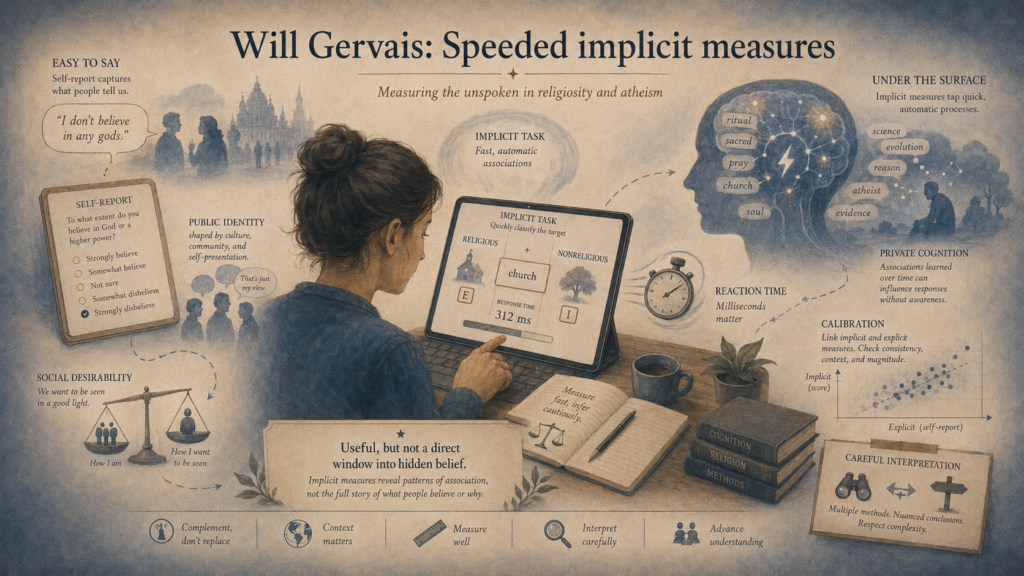
Gervais examines the promise and limits of implicit and speeded measures in the study of religiosity and atheism. He contrasts easy-to-collect self-reports with the harder question of underlying cognition, especially when public identity, self-presentation, and social desirability may diverge from private belief. The talk is deliberately cautious: implicit measures can be useful, but they need calibrated expectations, careful interpretation, and should not be treated as direct windows into hidden belief.